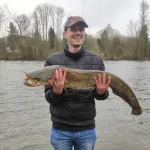
Bass are the fish that hook most American anglers for life. They live in just about every pond, lake, and river across the country, they hit hard, and they fight like they mean it. You don’t need a boat, a tackle box the size of a suitcase, or a tournament budget to catch them.
You need to know where they hide, when they feed, and what to throw at them. This guide covers all of that. By the end you’ll know how to find bass, how to fish for them from shore, and which five lures will cover almost everything you’ll run into on the water.
Largemouth vs. Smallmouth: Know What You’re Targeting
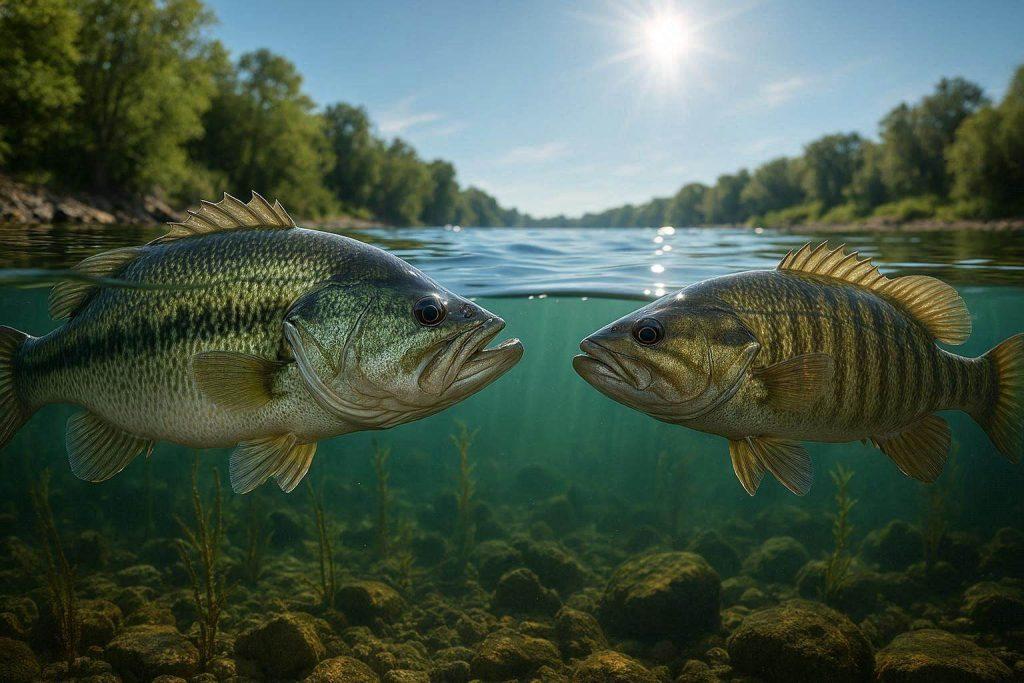
Most beginners lump all bass together, but the two main species behave differently, and knowing which one you’re after changes where you should fish.
Both species belong to the family Centrarchidae (the sunfish family), but they fish very differently.
Largemouth bass (Micropterus nigricans) like it warm, shallow, and weedy. You’ll find them around lily pads, docks, fallen trees, and grass edges in ponds and lake bays. They’re the bass most people picture, and they’re the easiest to start with. The world record weighed 22 lb 5 oz, which tells you how big these fish can get.
Smallmouth bass (Micropterus dolomieu) prefer cooler, clearer water with rock and current. Think rocky points, gravel flats, and river stretches with some flow. Pound for pound they fight harder than largemouth. They jump more, make longer runs, and don’t quit easily.
The world record sits at 11 lb 15 oz, well below largemouth territory, but a 3-pound smallmouth will outfight a 3-pound largemouth every time.
If you’re fishing a pond near your house, it’s almost certainly largemouth. If you’re on a clear, rocky river up north, you’re probably dealing with smallmouth. The techniques overlap a lot, so don’t overthink it early on.
Where to Find Bass (This Is 80% of the Job)
Finding bass matters more than any lure choice. A great angler on a bad spot gets skunked, and a beginner on a good spot catches fish. So learn to read the water first.
Bass are ambush predators. They sit next to something, wait for prey to swim past, and pounce. That “something” is cover, and it’s the single most important thing to look for. Fallen trees, stumps, lily pads, docks, weed edges, and riprap walls all hold fish. When you walk up to new water, your eyes should go straight to the nearest piece of cover.
Structure is the other half. This means changes in the bottom itself: points of land reaching into the water, drop-offs where shallow turns deep, and channel edges. Bass use these like highways, moving up to feed and dropping back to deeper water when they’re done. Their location shifts with the seasons.
In spring and fall, bass push shallow and you can reach them easily from the bank. In summer they follow a clear daily rhythm: right after sunrise they’re still in the shallows feeding, but once the sun climbs and the water warms up they slide out to deeper, cooler water. They come back shallow again at dusk.
In winter bass almost exclusively hold in the deepest sections of the lake or river, moving very little and feeding sparingly. That seasonal pattern is exactly why bank fishing works so well for beginners. Here’s a quick overview of where to find bass throughout the year:
| Season | Where to Fish |
|---|---|
| Spring | Shallow flats, spawning coves |
| Summer | Deep structure midday, shallow early/late |
| Fall | Transition areas, baitfish schools |
| Winter | Deep water |
If you want to go deeper on summer fishing specifically, check out our guide on the best summer lures for bass.
Ponds and small lakes warm up fast and keep bass shallow and reachable for most of the year. You don’t need a boat to catch quality fish. You need to be standing in the right place at the right time. That’s especially true for shore fishing, which gets less credit than it deserves.
Bass Fishing From Shore (No Boat Needed)
Plenty of anglers think you need a boat to catch good bass. You don’t. Some of the best fishing happens within casting distance of the bank. Small ponds are perfect for shore fishing and ideal for beginners. They get less pressure than big public lakes, and the bass in a lightly fished pond will hit almost anything.
A neighborhood pond or a quiet farm pond can produce surprisingly big fish. Your casting angle matters more than your casting distance. Bass hold tight to the bank, often within 10 to 30 feet of shore, especially early and late in the day. Instead of bombing casts straight out into open water, cast parallel to the bank and work your lure along the edge where the fish actually are.
Accuracy beats distance. When you walk a shoreline, hit these spots in order: fallen trees and laydowns, points of land, docks and piers, riprap, and the edges of lily pad fields. Work each piece of cover thoroughly before moving on. And approach quietly.
Footsteps on a dock or heavy steps on the bank send vibrations into the water that spook nearby fish, so fish a spot before you walk out onto it.
Best Times to Catch Bass
Bass feed hardest in low light. Early morning and the last couple hours before dark are prime windows, because bass can see better than their prey in dim light and use that edge to hunt. If you only have two hours to fish, make them the first two after sunrise or the last two before sunset.
Spring is the best overall season. As the water warms into the 60s, bass move shallow to feed up before the spawn and get aggressive. A lot of personal-best fish come out of this pre-spawn window. Summer splits the day. Fish early and late when bass are shallow, then either go deep or find shade once the sun is high.
Bass hold tight to shady banks, docks, and overhanging trees through the heat, so target shade and you’ll keep catching when everyone else has quit. The magic water temperature range is 60 to 75°F. The closer you are to that, the more aggressive the fish, and the faster you can fish moving baits to cover water.
The Best Bass Lures for Beginners (Start With These Five)
You can walk into any tackle shop and drown in choices. Ignore most of it. These five lures will handle the vast majority of situations you’ll face.
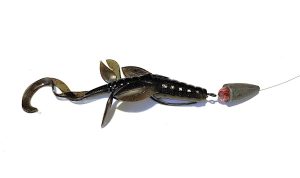
Texas-rigged plastic worm or creature bait: The most versatile bass lure there is. The hook buries in the plastic so it slides through grass, wood, and docks without snagging. You can throw it literally anywhere. If you learn one technique, learn this one.
Spinnerbait: About as easy as fishing gets: tie it on, cast it out, reel it back. The spinning blades flash and vibrate, which helps bass find it in stained or muddy water. It also comes through wood cover without hanging up much.

Ned rig or shaky head: A small worm on a light jighead. This is your clear-water, finicky-fish option. When bass get spooky and ignore everything else, a slow Ned rig dragged along the bottom gets bites.

Topwater popper or hollow-body frog: The most fun way to catch a bass, period. Best at dawn and dusk, or over matted grass with a weedless frog. The strike is a violent surface explosion. Wait a beat before setting the hook so the fish actually has it.
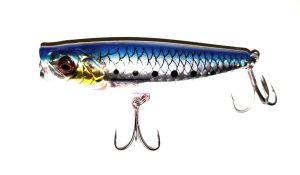
Crankbait: A hard bait that wobbles and dives when you reel. Easy to fish, covers water fast, and the square-bill version bounces off rocks and wood to trigger reaction strikes.
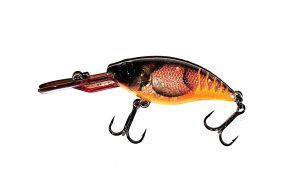
Lure Selection and Techniques: What to Throw and How to Fish It
| Conditions | Best Lure | How to Fish It |
|---|---|---|
| Cover, all water | Texas-rigged worm | Cast, let sink, lift and drop |
| Stained/muddy water, wood | Spinnerbait | Cast and steady reel |
| Clear water, pressured fish | Ned rig | Slow drag along bottom |
| Dawn, dusk, matted grass | Topwater frog/popper | Twitch, pause, twitch |
| Rock, wood, drop-offs | Crankbait | Reel to hit bottom, bounce off cover |
Knowing the lures is one thing. Here’s how to fish them.
Texas rig: Cast near cover, let the worm sink on a semi-slack line, and watch your line for a twitch. Most bites come on the fall. If nothing hits, lift your rod tip to hop the worm, let it drop again, take up slack, repeat. When you feel a tap, reel down and set the hook hard.
Ned rig: This one’s about doing less. Cast it out, let it hit bottom, and slowly drag it back with long pauses. Don’t overwork it. The subtle action is what gets clear-water bass to commit.
Spinnerbait around wood: Cast past a laydown or stump and reel it back so it bumps the cover. In shallow water, use a lighter bait and reel a little faster. In deeper water, slow-roll a heavier one. The deflection off cover often triggers the strike.
Topwater frog over grass: Work it across matted vegetation with short twitches of your rod tip, pausing in the open pockets. When a bass blows up on it, count to one before you swing. Set too early and you’ll pull it out of their mouth.
Crankbait along structure: Cast it out and reel steadily so the bait digs down and ticks the bottom or bumps cover. That contact and deflection is what draws reaction bites. Vary your speed until the fish tell you what they want.
One habit that matters more than any technique: tie good knots and check your line. After a few fish or a few passes through rough cover, your line gets nicked and your knot weakens. Re-tie. There’s nothing worse than losing the biggest bass of the day to a frayed line.
Basic Gear Setup
You don’t need expensive gear to start. A balanced, reliable setup beats a flashy one every time. For a rod, go with a 7-foot medium or medium-heavy spinning rod. It handles most lures, casts easily, and gives you enough backbone to pull a bass out of cover. Pair it with a spinning reel in the 2500 to 3000 size range for most bass applications.
Spinning gear is far more forgiving for beginners than a baitcaster, which tends to backlash until you’ve put in some practice. For line, you’ve got a few good options. Ten-pound monofilament is cheap, forgiving, and fine to learn on. If you want a step up, run braid in the 10 to 15 lb range as your main line with a fluorocarbon leader.
Braid gives you sensitivity and strength, and the fluoro leader stays nearly invisible in clear water. If you want a closer look at reels in this range, our Shimano Sedona 2500 FJ review walks through a budget option that handles bass without complaint.
Common Beginner Mistakes (And How to Fix Them)
A few simple habits separate anglers who catch fish from those who don’t.
- The biggest one is moving too fast. Beginners throw a worm two or three times, get nothing, and switch lures or spots. Pick a pattern and stick with it long enough to give it a real chance. Confidence in one technique beats jumping between ten.
- Second, fishing open water instead of cover. Bass relate to cover and structure. If you’re casting into the middle of a featureless flat, you’re mostly casting at empty water. Find the wood, rock, and grass.
- Third, using gear that’s too heavy for the conditions. In clear, shallow water, thick line and big lures spook fish. Scale down to lighter line and smaller baits when the water’s clear and the fish are wary.
- Fourth, ignoring your knots and line. Check both regularly and re-tie when in doubt.
- And finally, ignoring water temperature. It drives everything bass do. A cheap fishing thermometer tells you what the fish are doing before you even make your first cast. In water above 60°F bass are active and you can fish fast and shallow with moving baits. Once temperatures drop below 50°F, slow down and go deep. Between 50 and 60°F it pays to experiment with both.
Frequently Asked Questions
What is the best bait to catch bass for beginners?
A Texas-rigged plastic worm is the best all-around choice. It’s weedless, you can fish it anywhere, and it catches bass in every season. A spinnerbait is a close second because it’s almost foolproof to fish. Start with those two and you’ll cover most situations.
How do you catch bass from shore without a boat?
Fish the cover within casting range and cast parallel to the bank rather than straight out. Bass sit close to shore, especially early and late in the day. Hit fallen trees, docks, points, and lily pad edges. Small ponds are the easiest place to start since they hold shallow bass most of the year.
What time of day is best for bass fishing?
The first two hours after sunrise and the last two before sunset. Bass feed most aggressively in low light. In summer, those windows matter even more because midday heat pushes bass deep or into shade.
How do you catch bass in a pond?
Ponds are some of the best beginner water there is. Walk the bank and target every piece of cover: overhanging trees, weed edges, any structure you can spot. A Texas-rigged worm or a small spinnerbait will get bites. Pond bass see less pressure, so they’re often less picky than lake fish.
What size hook should I use for bass?
For a Texas-rigged worm, a 3/0 or 4/0 offset worm hook covers most plastic worm sizes. For a Ned rig, the small jighead comes with the hook built in. Match the hook to the bait size rather than the fish.
Is a spinning or baitcasting reel better for beginners?
Spinning, without question. A 2500 or 3000 size spinning reel is easy to cast, forgiving with lighter lures, and won’t backlash the way a baitcaster does while you’re learning. You can graduate to a baitcaster later for heavier cover and bigger baits.