Summer Bass Behavior: Why Heat Kills the Bite
Summer 2026 is brutal. Extended heatwaves, packed public lakes, and bass that have seen every popular lure so many times they don’t even bother to move. The fish are still there. They’re just not interested. High water temperatures push oxygen levels down in the shallows, which makes bass lethargic and hard to trigger.
The setups that worked in spring stop producing.
You need to split your approach: go extremely finesse for pressured fish that spook at anything heavier than 6 lb fluoro, or go big and aggressive to force a reaction strike from a deep fish that refuses to chase. If you’re still building your general bass fishing foundation, our beginner’s guide to catching bass is worth a read first.
For everyone else, here’s what’s actually working this summer.
Topwater at Dawn: Two Lures That Work Before the Heat Sets In
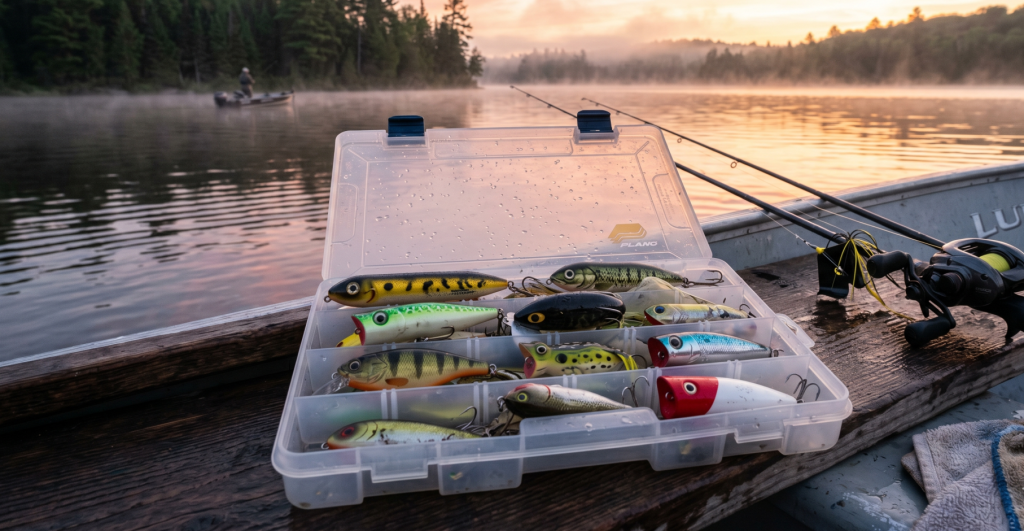
The first couple hours after sunrise are the best bass fishing of the day in summer. Water temperatures are still manageable, light is low, and bass push into the shallows to feed. On a lot of lakes this lines up with the shad spawn, where baitfish get pushed against the surface along shallow banks and bass are actively hunting.
Once the sun climbs, that window closes fast. The fish drop back to deeper water or tuck under heavy vegetation, and topwater stops producing almost immediately.
Two surface lures work particularly well during this morning window:
Heddon Super Spook Jr.: Walk the Dog for Giant Summer Bass


The Heddon Super Spook Jr. has been around forever, and it still catches fish because the walk-the-dog action genuinely works. The side-to-side glide mimics a dying shad, and on a calm morning surface that subtle movement is often all it takes. What makes it practical is how long you can keep it in the strike zone. A standard search bait blows through an area fast.
The Spook Jr. lets you slow down, work tight pockets, and stay on a fish that’s circling without committing. For early morning, color choice matters. Bone works well in low light because the contrast is easy for bass to track. Once the sun starts hitting the water, switch to Chrome. The flash mimics a fleeing shad and draws strikes even when the bite is starting to slow.
River2Sea Whopper Plopper: The Fastest Way to Locate Summer Bass on Top

When you need to cover water fast before the morning window closes, the River2Sea Whopper Plopper is hard to beat. Cast it out, reel steady, and let the rotating tail do the work. That’s genuinely all there is to it. The prop creates a deep, hollow plopping sound that carries well across flat, calm water. Bass don’t always eat it because they’re hungry.
A lot of strikes come from fish that are just annoyed by the noise, which means it produces even when the feeding activity has already started to slow down. Use it to locate active fish across big shallow flats before the sun pushes them deep. Once you get a strike or mark a school, slow down and pick the area apart with something more precise.
Finesse Fishing: How to Catch Pressured Summer Bass at Midday
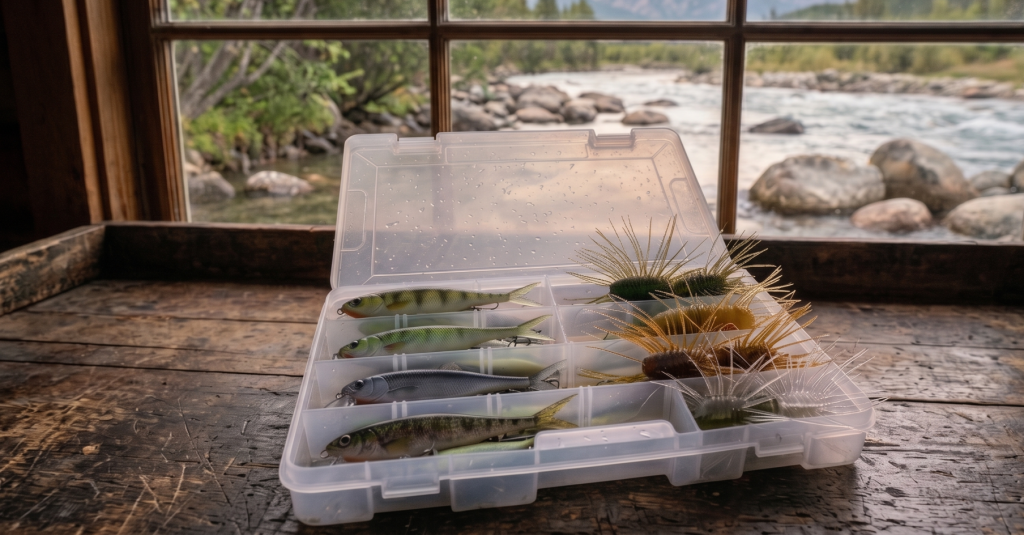
By midday the bite slows down. The sun is high, the water is warm, and bass on heavily fished public lakes have seen enough soft plastics to know what a hook looks like. Standard presentations stop working, and that’s not an exaggeration on pressured summer water.
The adjustment is simple: go smaller and slower. Finesse fishing works in these conditions because it looks like easy, unthreatening food. Nothing splashes, nothing vibrates aggressively, nothing triggers a spook response. Before you tie on a finesse bait, make sure your gear is up to it. Light presentations need the right rod to cast properly and detect subtle bites.
If you’re not sure your current setup works for finesse, check out our guide to the best bass spinning rods under $100 before you head out.
Z-Man Fuzzy TRD: The Urchin Bait That Catches Bass When Nothing Else Works

The Z-Man Fuzzy TRD is worth knowing about if you haven’t tried it yet. The urchin-style profile looks odd, but the tiny soft appendages pulse and move without any rod input. On the bottom, sitting completely still, it still looks alive. A lot of that comes down to the ElaZtech material.
It’s buoyant, which means when you rig it on a mushroom jighead for a Ned presentation, the bait stands straight up off the bottom instead of laying flat. That subtle difference matters on pressured fish. Standard plastics look dead at rest. This one doesn’t.
Rapala CrushCity Mooch Minnow: The Best Live Sonar Bait for Summer Bass

Forward-facing sonar has made suspended bass a realistic target that most anglers ignored before. You can see the fish on screen, track where it’s moving, and drop a bait directly into its path. The Rapala CrushCity Mooch Minnow is built for exactly that situation. It’s a horizontal minnow bait designed to hang balanced on a scrounger or jighead.
The soft plastic is responsive enough that a small rod tip twitch makes the tail quiver without moving the whole bait out of position. That matters when you’re trying to keep the lure in front of a specific fish that isn’t moving much.
The strolling technique is straightforward: spot a fish on your electronics, match its depth, and move the bait slowly through its lane with subtle twitches. Lethargic midday bass that won’t chase anything fast will often eat this if you put it close enough.
Deep Water Bass Fishing: How to Target Summer Ledges and Brush Piles
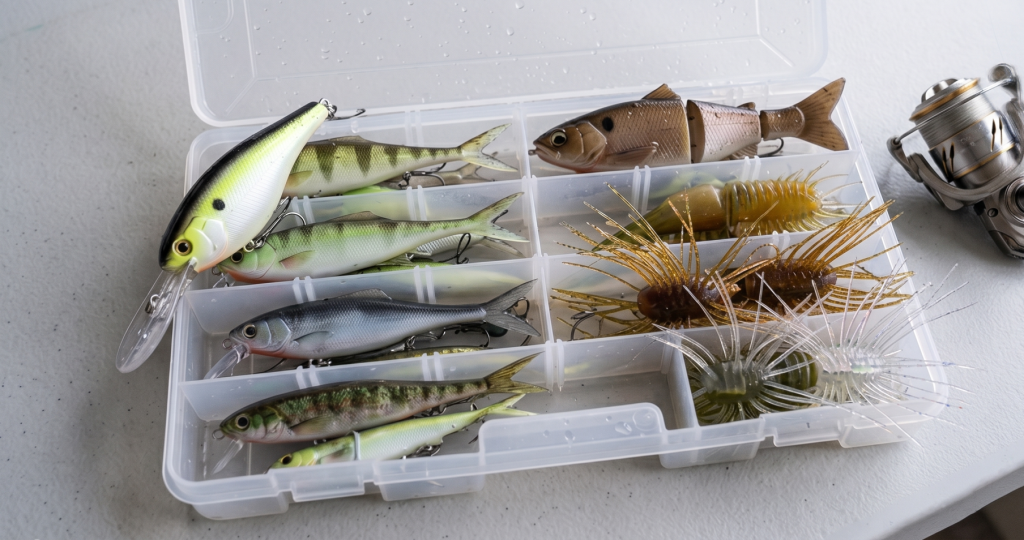
Once water temperatures push past 85°F, the bigger bass are mostly gone from the shallows. They move to deeper river channels, offshore ledges, humps, and brush piles where the water stays cooler and oxygen levels are higher.
These fish are catchable, but they sit tight to specific pieces of structure. A few feet in the wrong direction and you’re fishing empty water.
Two approaches work consistently at this depth: go big enough to trigger a reaction strike from a fish that isn’t actively feeding, or slow down and work thick timber precisely enough to pull a fish out without hanging up.
Strike King 10XD: The Best Deep Diving Crankbait for Summer Ledge Fishing

The Strike King 10XD is built for one job: reaching bass that are sitting deeper than 20 feet on offshore ledges. It’s a big, heavy plug and fishing it all day is genuinely tiring on your arms. That’s worth knowing before you commit to it for a full session. What justifies the effort is what happens when the bill hits bottom.
The bait deflects off rocks and sunken logs with an erratic, unpredictable wobble that’s hard to replicate with lighter crankbaits. That deflection is what triggers strikes from fish that have ignored everything else coming through the area. For deep water where light is limited, Sexy Shad and Chartreuse Sexy Shad both hold up well.
The flash is visible from a distance and both patterns have a long track record on ledge fish.
Berkley PowerBait Chop Block: How to Fish a Glide Bait for Deep Summer Bass

Glide baits aren’t just a spring bait anymore. The Berkley PowerBait Chop Block has been producing on deep summer structure, particularly around dock pilings and steep bluffs where big bass sit in the shade waiting for something worth eating. The large profile is the main draw. Bass holding deep in summer aren’t chasing small baits.
They want a meal, and the Chop Block looks like one. What sets it apart from hard glide baits is how quiet it runs. The joints are silent and the hooks sit flush against the body via internal magnets, so there’s no clanking on the retrieve. A single rod tip twitch cuts the bait wide to the side with an erratic chop.
Placed directly into a shaded ambush zone, that sudden movement from a large bait is often enough to draw a strike from a fish that hasn’t moved all day.
Mat Punching: How to Catch Big Bass in Thick Summer Vegetation
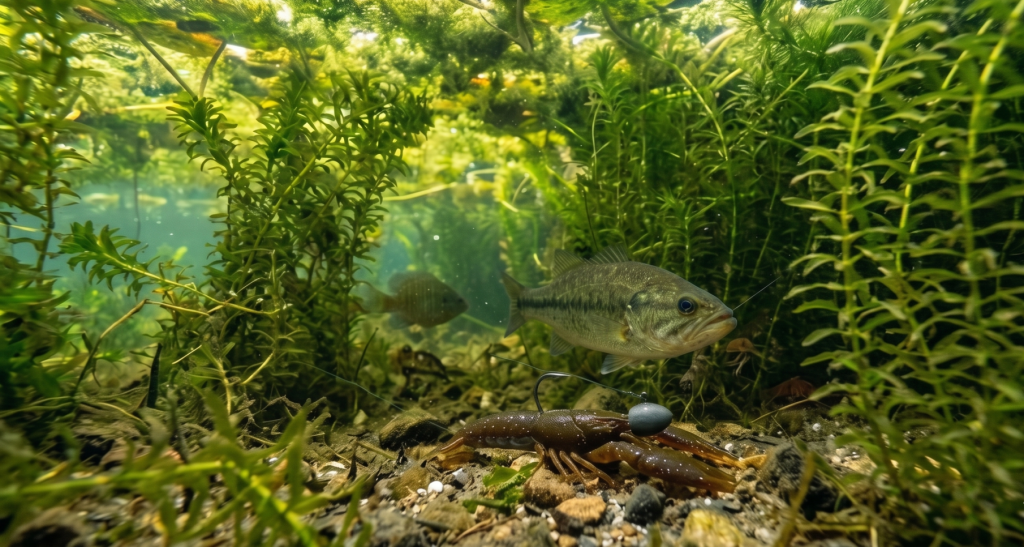
Not every bass leaves the shallows in summer. A lot of big fish stay put by moving into the thickest vegetation on the lake.
Heavy mats of hydrilla, lily pads, and matted algae block direct sunlight, which keeps the water underneath noticeably cooler than open water nearby. Hydrilla also produces oxygen during daylight hours, so a dense mat isn’t just shade. It’s one of the better-oxygenated spots on the lake in summer, which is why you’ll find bluegill and crawfish in there too.
Bass know that. The problem is getting a bait through the surface. Standard presentations hang up on top of the mat and never reach the fish. One heavy-cover setup works consistently for punching through and getting down to where the bass actually are:
Compact Creature Baits: The Best Punch Bait for Heavy Summer Mats

Punching mats comes down to bait selection and weight. You need something compact enough to slip through small openings without collecting grass on the way down. A bait with long, flowing appendages hangs up on the surface every time. A tight creature bait or compact craw profile gets through cleanly.
Rig it Texas-style on a 1 to 1.5 oz tungsten weight pegged directly against the bait. The heavier the mat, the more weight you need to punch through without the rig stalling out on top. Pitch onto the mat and wait. You’ll feel the weight break through, then a fast drop into the open water underneath. Bites often come immediately on that fall, and they’re usually not subtle.
A bass sitting under a mat in summer doesn’t inspect the bait. It either eats it or it doesn’t, and when it does you’ll know.
- Whiskey Riff
- Bassmaster
- Own Experience